Category: Poet

  • 9 Famous Authors’ Tips for Writing Better Poetry

    9 Famous Authors’ Tips for Writing Better Poetry

    Some crazy tips you ain’t ever heard off

    Writers have all sorts of interesting suggestions and advice on how to write and the things that motivated them to write their greatest pieces of work.

    Some of their tips might be practical like, get enough sleep, or write outside in a beautiful environment, but others are downright batty.

    Each writer has their own superstitions and best practices, but I bet you’ve never heard of some of these before!

    Take a look at 9 tips on how to write better poetry from some of the greats.


    1. MAKE TIME FOR TEATIME

    Samuel Johnson once said of himself: “[I am a] hardened and shameless tea-drinker, who has, for twenty years, diluted his meals with only the infusion of this fascinating plant; whose kettle has scarcely time to cool; who with tea amuses the evening, with tea solaces the midnight, and, with tea, welcomes the morning.” The end result was that he reportedly drank 25 cups in a single sitting.


    2. AN APPLE A DAY …

    .. is best eaten in the tub. Agatha Christie would chow down on the fruit while taking a bath and dreaming up ideas. If fresh apples aren’t your thing, Friedrich Schiller had an alternative use: letting them rot under the lid of your writing desk. Whenever he needed a hit of inspiration, Schiller would lift the lid and let the putrid stench lead him to brilliance.


    3. DON YOUR BIRTHDAY SUIT …

    James Whitcomb Riley—known as the “Hoosier Poet”—would rent a hotel room and strip down to do his writing. Counterintuitively, this was actually a means of self-preservation, as the nakedness kept Riley from going to the bar.


    4. … HAVE A SOAK WHILE YOU’RE AT IT …

    While Riley fought to keep himself out of the world in order to write, Edmond Rostand fought to keep the world out of his writing space. He became so frustrated by interruptions that he ended up sitting naked in the bathtub to work.


    5. BOOK A HOTEL ROOM

    Maya Angelou holed up in hotel rooms like Riley, but stayed clothed (as far as we know). The author would rent a room in her hometown by the month as a dedicated place to do her writing. Angelou had all the decorations removed and requested that housekeeping refrain from cleaning, for fear that a valuable scrap of paper might get discarded.


    6. GET FRISKY

    The verdict is out about whether it helped George Sand’s (a.k.a. Amantine-Lucile-Aurore Dupin) writing, but her lover, fellow author Alfred de Musset, found it exciting when Sand would waste no time between lovemaking and writing. That’s probably for the best, since Sand often wrote between 10 p.m. and 5 a.m.


    7. BEFRIEND A FELINE

    Edgar Allan Poe wrote works “Annabel Lee” and “Ulalume” with his beloved cat—named Catarina—sitting on his shoulder. While she wasn’t black, Catarina is also believed to be the inspiration for the 1843 story, “The Black Cat.”


    8. THERE’S ALWAYS OPIUM

    It’s not one to try at home: Samuel Taylor Coleridge wasn’t shy about his use of opium and even said that Kubla Khan was inspired by an opium dream. Coleridge was interrupted while writing the poem and ended up forgetting the lines he needed to complete the structure as originally intended. It wasn’t published until some 20 years later, and only then because Lord Byron encouraged it.


    9. ADOPT AN ALIAS

    It might serve you well to escape within yourself, just as T.S. Eliot did after the success of The Waste Land. Eliot started renting rooms in London’s Charing Cross Road and became “Captain Eliot” or “The Captain.” If that’s not enough, incorporate makeup into the mix. Captain Eliot was also fond of wearing green face powder and lipstick to look like a cadaver.


    Article credit: MentalFloss.com

  • Walt Whitman: 10 Of His Greatest Quotes To Inspire You

    Walt Whitman: 10 Of His Greatest Quotes To Inspire You

    One of the Most Influential American Poets of All Time

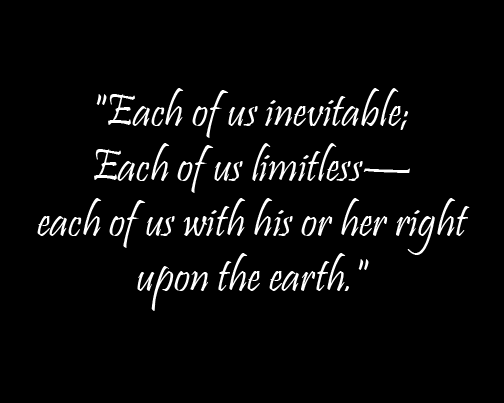
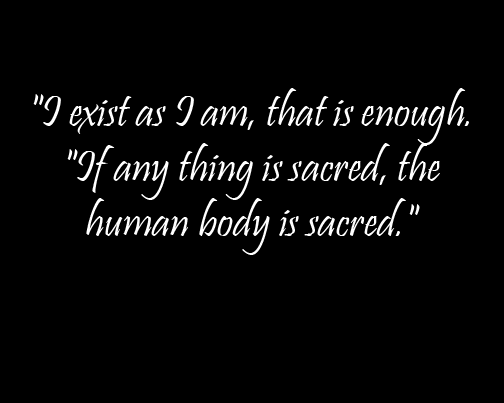
    You have probably heard of Walt Whitmen, one of the most influential poets in America, sometimes called the father of ‘free verse’. Whitman was very concerned with politics at the time and he believed there was a relationship between a poet and society.

    Whitman was clearly a profound thinker and some of his thoughts can be seen in the quotes below. I would even go to say that he was deeply spiritual.

    We have carefully selected 10 of Whitman’s best quotes below. Let us know what you think and feel free to share!


    1.

    W1


    2.

    W2

    3.


    W3

    4.


    W4


    5.

    W5


    NEXT 5 ON THE NEXT PAGE!

  • Read “The Cinnamon Peeler”

    Read “The Cinnamon Peeler”

    One of The Most Beautiful Poems by Michael Ondaatji

    If I were a cinnamon peeler
    I would ride your bed
    And leave the yellow bark dust
    On your pillow.

    Your breasts and shoulders would reek
    You could never walk through markets
    without the profession of my fingers
    floating over you. The blind would
    stumble certain of whom they approached
    though you might bathe
    under rain gutters, monsoon.

    Here on the upper thigh
    at this smooth pasture
    neighbour to you hair
    or the crease
    that cuts your back. This ankle.
    You will be known among strangers
    as the cinnamon peeler’s wife.

    I could hardly glance at you
    before marriage
    never touch you
    –your keen nosed mother, your rough brothers.
    I buried my hands
    in saffron, disguised them
    over smoking tar,
    helped the honey gatherers…

    When we swam once
    I touched you in the water
    and our bodies remained free,
    you could hold me and be blind of smell.
    you climbed the bank and said

    this is how you touch other women
    the grass cutter’s wife, the lime burner’s daughter.
    And you searched your arms
    for the missing perfume

    and knew

    what good is it
    to be the lime burner’s daughter
    left with no trace
    as if not spoken to in the act of love
    as if wounded without the pleasure of a scar.

    You touched
    your belly to my hands
    in the dry air and said
    I am the cinnamon
    Peeler’s wife. Smell me.


    Take a look at Miachel Ondaatji reading The Cinnamon Peeler to a group of avid listeners.

    The way he reads really brings the poem to life. You can almost see the images flash in your brain and smell the cinnamon permeating the air as the poem draws to an end.

    It’s a completely different experience when an author reads their own work. They don’t always pause when you pause or have the same rhythm in their voice as they dance over the words.

    It’s a whole different experience.

    Check it out!

  • Some of the Most Powerful Excerpts From Poetry

    Some of the Most Powerful Excerpts From Poetry

    Famous Lines From Our Favourite Poets

    Many of us have heard or seen famous lines of poetry (even if we are not aware of it). Sometimes it could be in a movie we are watching to illustrate some poignant theme, it could be something you were forced to learn in school or a play, or perhaps stuck on the wall of a person you know.

    Either way, these excerpts stick in our minds for a reason because they are powerful and moving. Either they reflect something of ourselves or make us see the world in a different way.

    Here are some of my favourites below.


    1.

    She walks in beauty, like the night
    Of cloudless climes and starry skies;
    And all that’s best of dark and bright
    Meet in her aspect and her eyes…

    Lord Byron


    2.

    He was my North, my South, my East and West.
    My working week and my Sunday rest.
    My noon, my midnight, my talk, my song.
    I thought that love would last for ever: I was wrong.

    W.H. Auden


    3.

    Tell me, what is it you plan to do
    with your one wild and precious life?

    Mary Oliver


    4.

    Do not go gentle into that good night,
    Old age should burn and rave at close of day;
    Rage, rage against the dying of the light.

    ~ Dylan Thomas


    5.

    To be, or not to be: that is the question:
    Whether ’tis nobler in the mind to suffer
    The slings and arrows of outrageous fortune,
    Or to take arms against a sea of troubles,
    And by opposing end them? To die: to sleep;
    No more; and by a sleep to say we end
    The heart-ache and the thousand natural shocks
    That flesh is heir to, ’tis a consummation
    Devoutly to be wish’d.

    ~ Shakespeare


    6.

    Time does not bring relief; you all have lied
    Who told me time would ease me of my pain!
    I miss him in the weeping of the rain;
    I want him at the shrinking of the tide;
    The old snows melt from every mountain-side,
    And last year’s leaves are smoke in every lane;
    But last year’s bitter loving must remain.

    ~ Edna St. Vincent Millay


    7.

    But I, being poor, have only my dreams;
    I have spread my dreams under your feet;
    Tread softly because you tread on my dreams.

    ~ Yeats


    8.

    Two roads diverged in a wood, and I—
    I took the one less traveled by,
    And that has made all the difference.
    ~ Robert Frost


    9.

    I wandered lonely as a cloud
    That floats on high o’er vales and hills,
    When all at once I saw a crowd,
    A host of golden daffodils;
    Beside the lake, beneath the trees,
    Fluttering and dancing in the breeze.

    ~ William Wordsworth


    10.

    It doesn’t interest me
    what you do for a living.
    I want to know
    what you ache for
    and if you dare to dream
    of meeting your heart’s longing.

    ~ Oriah Mountain Dreamer


    Image credit: thelatinoauthor.com

  • Who is Your Inner Poet?

    Who is Your Inner Poet?

    Which Poet Resonates With You?

    We have fallen in love with many different poets all through the years, it’s hard to pick a favourite.

    So why don’t you let this fun quiz do it for you?

    Take this quiz to discover who your inner poet is! Which poets resonate with your favourite places, food and other likes and dislikes. I’m not sure how much of this was actually researched, but we can all recognise some meaningless fun when we see it. Welcome to social media where minutes of your life get lost in a black hole.

    P.S I got Emily Dickinson


    Click here >> QUIZ

    poetquiz


  • 10 Contemporary Poets You Need To Read

    10 Contemporary Poets You Need To Read

    Do You Know These Poets?

    We can easily name some of the greatest poets who have ever lived, such as Walt Whitman, Robert Frost and Emily Dickinson, but do we know much about our modern poets?

    In the past poets were known because of their published works, where this day and age modern poets can use social media. There are so many talented poets out there it can be hard to keep track of them all.

    Some people claim poetry as a dying art, but these modern poets show that this is definitely not true.

    Check out these contemporary poets below that you might not have heard off.

    Full article here.


    1. Claudia Rankine

    Poet1

    Claudia Rankine’s Citizen: An American Lyric was nominated for the National Book Critics Circle Award in both Poetry and Criticism, winning for Poetry. The dual nominations illustrate the power and timeliness of Rankine’s poems to discourse on race in America.


    2. Carolyn Forche

    Poet2

    Carolyn Forche most famously coined the term “poetry of witness,” which came in the aftermath of her observations with Amnesty International of civil war in El Salvador in the late 1970s, resulting in The Country Between Us. Her poetry challenges the distinctions between personal and political when writing about the world around us.

    3. Natasha Trethewey

    Poet3

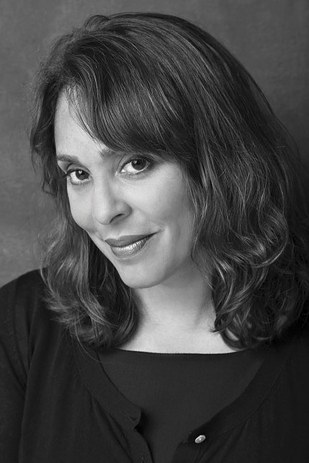
    Appointed as U.S. Poet Laureate from 2012–2014, Natasha Trethewey explores the intersections of race, art, and history in Bellocq’s Ophelia and in her 2006 Pulitzer Prize-winning Native Guard.


    4. Gregory Pardlo

    Poet4

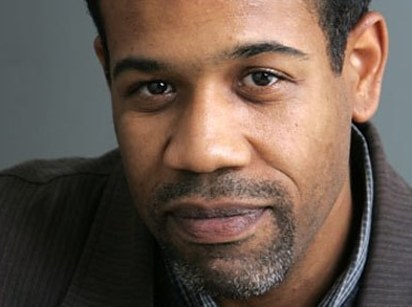
    The winner of the 2015 Pulitzer Prize for Poetry for Digest, Gregory Pardlo looks at the American identity through the lenses of fatherhood and race, while acknowledging the ever-present past.

    5. Charles Simic

    Poet5

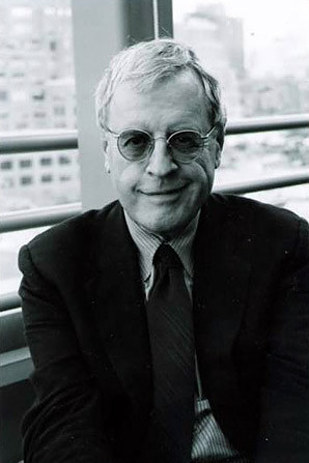
    A former U.S. Poet Laureate, Pulitzer Prize winner, and MacArthur Foundation fellow with over 30 books of poetry, Charles Simic’s accomplishments qualify him as one of America’s most important poetic voices.


    6. Marie Howe

    Poet6

    The 2012–2014 Poet Laureate of New York state, Marie Howe is best known for What The Living Do, which unflinchingly dealt with the AIDS crisis through a personal lens: Howe’s brother John died of complications from AIDS.


    7. Rickey Laurentiis

    Poet7

    A recipient of multiple poetry fellowships, from the National Endowment for the Arts to the Poetry Foundation, Rickey Laurentiis’ poems examine how the collective American past is still an active force in the present. His forthcoming book Boy With A Thorn was selected for the 2014 Cave Canem Poetry Prize.


    8. Jane Hirshfield

    Poet8

    Jane Hirshfield’s poetry is influenced by her personal Buddhist faith, though she prefers not to labeled. “I am a human poet, that’s all,” she told Spirituality and Healthin 2013. Notably, Hirshfield was one of the first women to graduate from Princeton. Her eighth book of poetry, The Beauty, was released last month.

    9. Cathy Park Hong

    Poet9

    The recipient of multiple fellowships, including a National Endowment for the Arts Fellowship, Cathy Park Hong’s poems are referential and fragmented in form. In her latest book Engine Empire, Hong juxtaposes the worlds of the old American West with industrialized China, and our increasing dependence on collective and digitized data.


    10. Eileen Myles

    Poet10

    2012 Guggenheim Fellow Eileen Myles uses bold imagery and unexpected line breaks in her quick-voiced poems, most recently in her two-part collection Snowflake / different streets. She also famously participated in a write-in campaign for the 1992 presidential election.

    Image and Article Credit: Thanks Buzzfeed

  • Dante Turns Seven Hundred and Fifty

    Dante Turns Seven Hundred and Fifty

    For the Love of Dante

    If you love poetry then you would have definitely heard of Italian poet Dante. Writer, poet and political thinker Dante has made an impression on both theology and literature.

    Whether you have been consumed by the Inferno or have pursued some of his other works, there is no doubt that Dante is up there with the greats such as Shakespeare and Yeats.

    In celebration of Dante turning 750, being born in 1265, (wow this guy is old!), John Kleiner shares his love of the poet and describes why he is still celebrated today.

    Full article here.


    Dante’s seven-hundred-and-fiftieth birthday is sometime in the coming month—he was born, he tells us in Paradisounder the sign of Gemini—and, to mark the occasion, more than a hundred events are planned. These include everything from the minting of a new two-euro coin, embossed with the poet’s profile, to a selfie-con-Dante campaign. (Cardboard cutouts of the poet are being set up in Florence, and visitors are encouraged to post pictures of themselves with them using the hashtag #dante750.) There’s talk of extending the celebrations to 2021, the seven-hundredth anniversary of the poet’s death.


    Italian kids first encounter Dante at school, when they’re in the equivalent of seventh grade. They return to him in the eleventh grade to study the Inferno in more depth. In twelfth grade, they work on the Purgatorio. Secondary school—liceo—lasts five years, and so in what might be considered the thirteenth grade, the text for the year is the Paradiso. I recently asked the high-school-aged son of an Italian friend of mine about the experience. “It’s annoying, boring, and it never ends,” he told me. “But then you get to like it.”


    At the college level, the study of Dante ratchets up by slowing down. In the late nineteen-eighties, I spent a semester in Florence, where I sat in on a Dante course at the university. The entire term was devoted to the analysis of a single canto. As it happened, the canto was Inferno 19, which is devoted to simony. Dante reserves a special hole in the third sub-circle of the eighth circle of Hell for corrupt Popes; they are stuffed into it, one after another, headfirst. Their feet are then lit on fire. Among the issues the class discussed at length was how, exactly, new Popes could be accommodated. Had space been left open for all those that would come along? Or did each new arrival compress his predecessor into some kind of pontifical pesto?


    For the last nine months, I’ve been living in Rome, and the experience has helped me to appreciate another, more subversive side to Dante’s appeal. Though he may be force-fed to seventh graders, applauded in the Senate, and praised by the Holy See, Dante is, as a writer, unmistakably anti-authoritarian. He looks around and what he sees is hypocrisy, incompetence, and corruption. And so he strikes out, not just at the Popes, whom he turns upside down and stuffs in a hole, but also at Florence’s political leaders, whom he throws into a burning tomb, and his own teacher, whom he sets running naked across scorching sand.


    Article and image credit: The New Yorker

  • The Haunting Poetry of a Chinese Factory Worker who Committed Suicide

    The Haunting Poetry of a Chinese Factory Worker who Committed Suicide

    The Death of a Poet

    This is a sad tale for sure, but as unfortunate as it is this story brings out greater awareness of the conditions workers in China go through every day.

    Unfortunately this hardship resulted in the death of an unknown poet.

    His beautiful words expressed the dark emotions he felt right up to his last day.

    We might feel like going to work is tough and endure the strain of not been able to do things that we want, but gaining a little insight of the work culture in some of these factories in China, has made me appreciate the time that I do have.

    Read below.


    On the last day of September, a 24-year-old migrant worker in the southern Chinese city of Shenzhen killed himself. Xu Lizhi jumped out of a window of a residential dormitory run by his employer, Foxconn, the huge electronics manufacturing company with a million-strong workforce that makes the majority of the world’s Apple iPhones.


    In most cases, Xu’s suicide would have been yet another footnote in the vast, sweeping story of China’s economic boom and transformation. He is one of a legion of young Chinese migrants who emerge out of rural obscurity to find work in China’s teeming cities, only to end up crushed by both the dullness and stress of factory jobs, insufficient wages and a steady accumulation of personal disappointments.


    But Xu was a poet. And, after his death, his friends collected his work and got some published in a local Shenzhen newspaper.


    The London Review Books cites this poem by Xu, which is a play on another verse by the famous Chinese poet Gu Cheng:


    We ran along the railway,
    arriving in some place called ‘the City’
    where we trade in our youth, and our muscle.
    Finally we have nothing to trade, only a cough
    and a skeleton nobody cares about.
    ‘Sleepless’

    Midnight. Everyone is sleeping soundly,
    We keep our pair of young wounds open.
    These black eyes, can you really lead us to the light?
    ‘Night Shift’


    The last poem Xu penned, perhaps even on the day he killed himself, signals his decision.


    I want to touch the sky, feel that blueness so light
    But I can’t do any of this, so I’m leaving this world
    Everyone who’s heard of me
    Shouldn’t be surprised at my leaving
    Even less should you sigh or grieve
    I was fine when I came, and fine when I left.


    Article and Photo Credit: The Washington Post