Category: General

  • 10 Benefits of Reading: Why You Should Read Every Day

    10 Benefits of Reading: Why You Should Read Every Day

    Now you don’t need an excuse to read

    We all love to read and I’m going to assume you wouldn’t be on this page if you didn’t experience small amounts of ecstasy every time you pick up a good book.  If you are not an avid reader than you might want to reconsider. Not only is reading a beautiful way to have adventures of the mind, but there are some other crazy cool benefits too.

    Check out 10 reasons why you should keep reading and convince your friends and family to read too!

    1. Mental Stimulation

    Studies have shown that staying mentally stimulated can slow the progress of (or possibly even prevent) Alzheimer’s and Dementia, since keeping your brain active and engaged prevents it from losing power. Just like any other muscle in the body, the brain requires exercise to keep it strong and healthy, so the phrase “use it or lose it” is particularly apt when it comes to your mind.


    2. Stress Reduction

    No matter how much stress you have at work, in your personal relationships, or countless other issues faced in daily life, it all just slips away when you lose yourself in a great story. A well-written novel can transport you to other realms.


    3. Knowledge

    Everything you read fills your head with new bits of information, and you never know when it might come in handy. The more knowledge you have, the better-equipped you are to tackle any challenge you’ll ever face.

    4. Vocabulary Expansion

    This goes with the above topic: the more you read, the more words you gain exposure to, and they’ll inevitably make their way into your everyday vocabulary. Being articulate and well-spoken is of great help in any profession, and knowing that you can speak to higher-ups with self-confidence can be an enormous boost to your self-esteem.


    5. Memory Improvement

    When you read a book, you have to remember an assortment of characters, their backgrounds, ambitions, history, and nuances, as well as the various arcs and sub-plots that weave their way through every story.  Amazingly enough, every new memory you create forges new synapses (brain pathways) and strengthens existing ones, which assists in short-term memory recall as well as stabilizing moods.


    6. Stronger Analytical Thinking Skills

    Have you ever read an amazing mystery novel, and solved the mystery yourself before finishing the book? If so, you were able to put critical and analytical thinking to work by taking note of all the details provided and sorting them out to determine “whodunnit”.

    That same ability to analyze details also comes in handy when it comes to critiquing the plot; determining whether it was a well-written piece, if the characters were properly developed, if the storyline ran smoothly, etc.


    7. Improved Focus and Concentration

    When you read a book, all of your attention is focused on the story—the rest of the world just falls away, and you can immerse yourself in every fine detail you’re absorbing. Try reading for 15-20 minutes before work (i.e. on your morning commute, if you take public transit), and you’ll be surprised at how much more focused you are once you get to the office.


    8. Better Writing Skills

    This goes hand-in-hand with the expansion of your vocabulary: exposure to published, well-written work has a noted effect on one’s own writing, as observing the cadence, fluidity, and writing styles of other authors will invariably influence your own work.


    9. Tranquility

    In addition to the relaxation that accompanies reading a good book, it’s possible that the subject you read about can bring about immense inner peace and tranquility. Reading spiritual texts can lower blood pressure and bring about an immense sense of calm, while reading self-help books has been shown to help people suffering from certain mood disorders and mild mental illnesses.


    10. Free Entertainment

    Though many of us like to buy books so we can annotate them and dog-ear pages for future reference, they can be quite pricey. For low-budget entertainment, you can visit your local library and bask in the glory of the countless tomes available there for free. Libraries have books on every subject imaginable, and since they rotate their stock and constantly get new books, you’ll never run out of reading materials.

    Article and image credit: Thinking Humanity

  • 10 Most Beautiful Words for Women

    10 Most Beautiful Words for Women

    Need some Delicious Words to Describe Women?

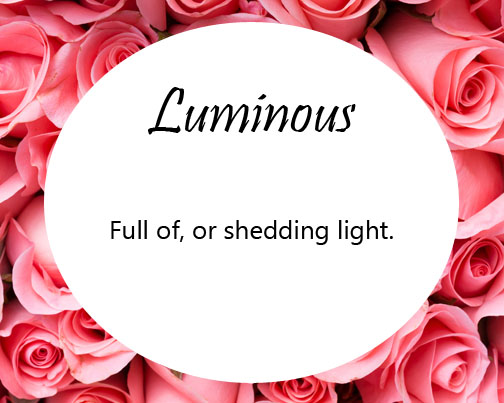
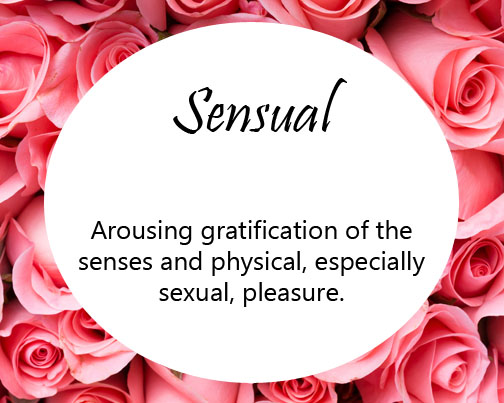
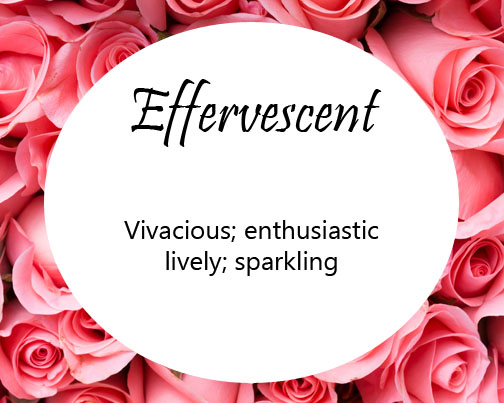
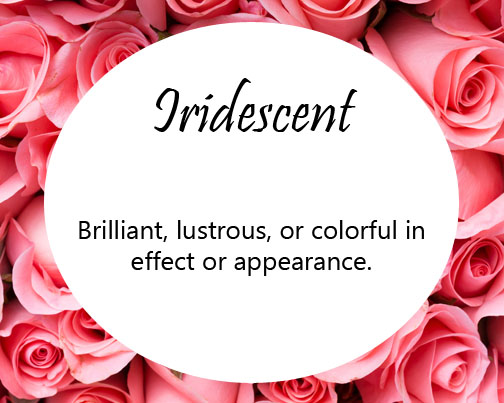
    Women can be described in various different ways in stories, movies and poems! We’ve heard the generic nice descriptions like, kind, funny, cute, happy, smart, lovely, pretty, wonderful etc

    But there are much better words to add to your repertoire. Have a look at the delicious list we have below and their meanings. Try out some of these the next time you pick up your pen or type on your computer.

    These are some of my favourites, but please feel free to share and add a few of your own in the comments!

    Check these 10 out below.

    Word1


    Word2


    Word3


    Word4


    Word5


    MORE ON THE NEXT PAGE!

  • 10 Delicious Words You’ve Never Heard to Improve Your Vocabulary

    10 Delicious Words You’ve Never Heard to Improve Your Vocabulary

    If You Write Then You Need To Add These Words to Your List

    They say if you want to be good at something then you need to keep honing your craft.

    If you write, then one of the most obvious ways to improve your writing skills is to keep writing and reading almost every day. Most of us do this already.

    But the other way is to improve your vocabulary!

    Below are 10 delicious sounding words, that you might not have seen before, to keep on file.

    If you have a favourite that’s not on this list, please add them in the comments below with the meaning.


    V1

    V2


    V3

    V4

    V5

    V6

    V7

    V8

    V9

    V10


  • Some of the Most Powerful Excerpts From Poetry

    Some of the Most Powerful Excerpts From Poetry

    Famous Lines From Our Favourite Poets

    Many of us have heard or seen famous lines of poetry (even if we are not aware of it). Sometimes it could be in a movie we are watching to illustrate some poignant theme, it could be something you were forced to learn in school or a play, or perhaps stuck on the wall of a person you know.

    Either way, these excerpts stick in our minds for a reason because they are powerful and moving. Either they reflect something of ourselves or make us see the world in a different way.

    Here are some of my favourites below.


    1.

    She walks in beauty, like the night
    Of cloudless climes and starry skies;
    And all that’s best of dark and bright
    Meet in her aspect and her eyes…

    Lord Byron


    2.

    He was my North, my South, my East and West.
    My working week and my Sunday rest.
    My noon, my midnight, my talk, my song.
    I thought that love would last for ever: I was wrong.

    W.H. Auden


    3.

    Tell me, what is it you plan to do
    with your one wild and precious life?

    Mary Oliver


    4.

    Do not go gentle into that good night,
    Old age should burn and rave at close of day;
    Rage, rage against the dying of the light.

    ~ Dylan Thomas


    5.

    To be, or not to be: that is the question:
    Whether ’tis nobler in the mind to suffer
    The slings and arrows of outrageous fortune,
    Or to take arms against a sea of troubles,
    And by opposing end them? To die: to sleep;
    No more; and by a sleep to say we end
    The heart-ache and the thousand natural shocks
    That flesh is heir to, ’tis a consummation
    Devoutly to be wish’d.

    ~ Shakespeare


    6.

    Time does not bring relief; you all have lied
    Who told me time would ease me of my pain!
    I miss him in the weeping of the rain;
    I want him at the shrinking of the tide;
    The old snows melt from every mountain-side,
    And last year’s leaves are smoke in every lane;
    But last year’s bitter loving must remain.

    ~ Edna St. Vincent Millay


    7.

    But I, being poor, have only my dreams;
    I have spread my dreams under your feet;
    Tread softly because you tread on my dreams.

    ~ Yeats


    8.

    Two roads diverged in a wood, and I—
    I took the one less traveled by,
    And that has made all the difference.
    ~ Robert Frost


    9.

    I wandered lonely as a cloud
    That floats on high o’er vales and hills,
    When all at once I saw a crowd,
    A host of golden daffodils;
    Beside the lake, beneath the trees,
    Fluttering and dancing in the breeze.

    ~ William Wordsworth


    10.

    It doesn’t interest me
    what you do for a living.
    I want to know
    what you ache for
    and if you dare to dream
    of meeting your heart’s longing.

    ~ Oriah Mountain Dreamer


    Image credit: thelatinoauthor.com

  • The Proper Way to Read a Poem

    The Proper Way to Read a Poem

    Do you read poems the right way?

    We all enjoy a good poem, and probably have a few saved on our computers, marked in a book or even printed out. But the question we should ask is, do we read poems the right way?

    Is there even a right way? I didn’t think so, but apparently there is.

    Poems impact us in different ways, and sometimes we have to read them multiple times to divine their deeper meanings. But to truly obtain these layers, there are other best practices that one should adhere to,

    Below are 10 examples.

    Full article here.


    1. When you read a poem, especially a poem not meant to be a “spoken word” poem, always read it out loud. (Never mind what they said in grammar school—to subvocalize so that you won’t bother your peers.) Your ear will pick up more than your head will allow. That is, the ear will tell the mind what to think.


    2. Try to meet a poem on its terms not yours. If you have to “relate” to a poem in order to understand it, you aren’t reading it sufficiently. In other words, don’t try to fit the poem into your life. Try to see what world the poem creates. Then, if you are lucky, its world will help you re-see your own.


    3. If you don’t know a word, look it up or die.


    4. A poem cannot be paraphrased. In fact, a poem’s greatest potential lies in the opposite of paraphrase: ambiguity. Ambiguity is at the center of what is it to be a human being. We really have no idea what’s going to happen from moment to moment, but we have to act as if we do.


    5. A poem has no hidden meaning, only “meanings” you’ve not yet realized are right in front of you. Discerning subtleties takes practice. Reading poetry is a convention like anything else. And you learn the rules of it like anything else—e.g., driving a car or baking a cake.


    6. A poem can feel like a locked safe in which the combination is hidden inside. In other words, it’s okay if you don’t understand a poem. Sometimes it takes dozens of readings to come to the slightest understanding. And sometimes understanding never comes. It’s the same with being alive: Wonder and confusion mostly prevail.


    7. There is nothing really lost in reading a poem. If you don’t understand the poem, you lose little time or energy. On the contrary, there is potentially much to gain—a new thought, an old thought seen anew, or simply a moment separated from all the other highly structured moments of your time.


    8. Try to see what world the poem creates. Then, if you are lucky, its world will help you re-see your own.


    9. Poetry depends on pattern and variation—even non-linear, non-narrative, anti-poetic poetry. By perceiving patterns and variations on those patterns, your brain will attempt to make order out of apparent chaos. “Glockenspiel,” “tadpole,” and “justice” have ostensibly nothing to do with each other, and yet your brain immediately tries to piece them together simply because they are there for the apprehending.


    10. Reading poetry is not only about reading poetry. Its alleged hermetic stylizations of syntax and diction can enhance your awareness of the world, even those things that don’t deal directly in words. A dress, a building, a night sky—all involve systems of pattern-recognition and extrapolation


    Image and Article Credit: The Alantic

  • A Video Game That Teaches You to Write Poetry

    A Video Game That Teaches You to Write Poetry

    Gaming Win by Writing Poetry and Prose

    It sounds strangely bizarre but it’s true.

    I’ve played quite a few games during my lifetime where you have to find objects, engage is some problem solving and a significant increase in reaction time. I’ve even recently heard of the ‘Writing Dead’, which encourages speed typing so you don’t get eaten by zombies.

    But I’ve never heard of this.

    A game has been released where you can finished the story line by writing your own poetry and prose!

    What does sound cool, is that at the end of the game you can print out all your writing and make it a book.

    Would that inspire you?


    We’re still a long way from Master Chief breaking into a Coleridge soliloquy. But game developers Ichiro Lambe and Ziba Scott have edged us a bit closer to that day with Elegy for a Dead World, a game they Kickstarted in October and released on Steam last month.


    Elegy lets players write prose and poetry as they explore distant planets and dead civilizations. The player faces 27 challenges in three worlds, each riffing on a specific British Romance-era poem: “Ozymandias” by Percy Bysshe Shelley, “When I Have Fears That I May Cease to Be” by John Keats, and “Darkness” by Lord Byron.


    The different challenges find the player in various roles: an emperor rallying his troops before a doomed battle, for example, or a schoolgirl evacuating a city being bombed. Players travel through beautifully designed backgrounds, while on-screen text narrates the story. But much of the text is left blank—that’s when players tap their inner Wordsworths, finishing the tale with their own imaginations.


    Throughout their adventure, players are tasked with using several writing styles: Plugging in blanks in prompts like serious Mad Libs, writing poems in rhyming couplets, or going totally freeform.


    Once you’ve completed an Elegy story of your own, you can actually make your tale a printable, readable reality.


    “I have a 20-page, full color, glossy coffee table book of an Elegy for a Dead World story,” Lambe says. “You can print it out, and suddenly it becomes a piece you and your friends can talk about. It’s something that you created.”


    Image and Article Credit: Wired.com

  • 10 of the Most Beautiful Lines of Poetry

    10 of the Most Beautiful Lines of Poetry

    Reminding Us Again Why We Love Poetry

    If you are a lover of poetry then there are definitely a few lines from your favourite poets that you remember by heart.

    Buzzfeed asked their members recently to share some of their favourite lines of poetry. You might have heard of some of these before, or they might be new to you, but they definitely captured me in some way. There is nothing like some beautiful lines of poetry to brighten up your day!

    Here are my favourite 10 of their full list, which you can find here.

    Hope you enjoy, and if you have a favourite feel free to share!


    1.

    poet1

    2.

    From “Variations on the Word Sleep” by Margaret Atwood:
    “I would like to be the air
    that inhabits you for a moment
    only. I would like to be that unnoticed
    and that necessary.”

    3.

    poetry2

    4.

    From “The Wasteland” by T.S. Eliot:
    “These fragments I have shored
    Against my ruins.”

    5.

    poet3

    6.

    From “The Second Coming” by William Butler Yeats:
    “The blood-dimmed tide is loosed, and everywhere
    The ceremony of innocence is drowned;
    The best lack all conviction, while the worst
    Are full of passionate intensity.”

    7.

    poet4

    8.

    From “Still I Rise” by Maya Angelou:
    “You may write me down in history
    With your bitter, twisted lies,
    You may trod me in the very dirt
    But still, like dust, I’ll rise.”

    9.

    poet5

    10.

    From “Auguries of Innocence” by William Blake:
    “To see a world in a grain of sand,
    And a heaven in a wild flower,
    To hold infinity in the palm of your hand,
    And Eternity in an hour.”


    Article and Image credit: Buzzfeed.com