Author: admin

  • 10 Benefits of Reading: Why You Should Read Every Day

    10 Benefits of Reading: Why You Should Read Every Day

    Now you don’t need an excuse to read

    We all love to read and I’m going to assume you wouldn’t be on this page if you didn’t experience small amounts of ecstasy every time you pick up a good book.  If you are not an avid reader than you might want to reconsider. Not only is reading a beautiful way to have adventures of the mind, but there are some other crazy cool benefits too.

    Check out 10 reasons why you should keep reading and convince your friends and family to read too!

    1. Mental Stimulation

    Studies have shown that staying mentally stimulated can slow the progress of (or possibly even prevent) Alzheimer’s and Dementia, since keeping your brain active and engaged prevents it from losing power. Just like any other muscle in the body, the brain requires exercise to keep it strong and healthy, so the phrase “use it or lose it” is particularly apt when it comes to your mind.


    2. Stress Reduction

    No matter how much stress you have at work, in your personal relationships, or countless other issues faced in daily life, it all just slips away when you lose yourself in a great story. A well-written novel can transport you to other realms.


    3. Knowledge

    Everything you read fills your head with new bits of information, and you never know when it might come in handy. The more knowledge you have, the better-equipped you are to tackle any challenge you’ll ever face.

    4. Vocabulary Expansion

    This goes with the above topic: the more you read, the more words you gain exposure to, and they’ll inevitably make their way into your everyday vocabulary. Being articulate and well-spoken is of great help in any profession, and knowing that you can speak to higher-ups with self-confidence can be an enormous boost to your self-esteem.


    5. Memory Improvement

    When you read a book, you have to remember an assortment of characters, their backgrounds, ambitions, history, and nuances, as well as the various arcs and sub-plots that weave their way through every story.  Amazingly enough, every new memory you create forges new synapses (brain pathways) and strengthens existing ones, which assists in short-term memory recall as well as stabilizing moods.


    6. Stronger Analytical Thinking Skills

    Have you ever read an amazing mystery novel, and solved the mystery yourself before finishing the book? If so, you were able to put critical and analytical thinking to work by taking note of all the details provided and sorting them out to determine “whodunnit”.

    That same ability to analyze details also comes in handy when it comes to critiquing the plot; determining whether it was a well-written piece, if the characters were properly developed, if the storyline ran smoothly, etc.


    7. Improved Focus and Concentration

    When you read a book, all of your attention is focused on the story—the rest of the world just falls away, and you can immerse yourself in every fine detail you’re absorbing. Try reading for 15-20 minutes before work (i.e. on your morning commute, if you take public transit), and you’ll be surprised at how much more focused you are once you get to the office.


    8. Better Writing Skills

    This goes hand-in-hand with the expansion of your vocabulary: exposure to published, well-written work has a noted effect on one’s own writing, as observing the cadence, fluidity, and writing styles of other authors will invariably influence your own work.


    9. Tranquility

    In addition to the relaxation that accompanies reading a good book, it’s possible that the subject you read about can bring about immense inner peace and tranquility. Reading spiritual texts can lower blood pressure and bring about an immense sense of calm, while reading self-help books has been shown to help people suffering from certain mood disorders and mild mental illnesses.


    10. Free Entertainment

    Though many of us like to buy books so we can annotate them and dog-ear pages for future reference, they can be quite pricey. For low-budget entertainment, you can visit your local library and bask in the glory of the countless tomes available there for free. Libraries have books on every subject imaginable, and since they rotate their stock and constantly get new books, you’ll never run out of reading materials.

    Article and image credit: Thinking Humanity

  • 40 AUTHORS ON HOW TO BE HAPPY

    40 AUTHORS ON HOW TO BE HAPPY

    Beautiful words from Famous Classic Authors

    Happiness is something that we all seek. Sometimes it seems like an elusive word filled with so much meaning, just a fingertip out of reach. Other times we can bask in it’s glow and feel fulfilled.

    But happiness means different things to everyone. Have a look at how classic authors through time have defined happiness.

    Check it out, and let us know your definition!

    ***


    NEXT PAGE FOR MORE CLASSIC AUTHOR QUOTES >>


  • 10 Charming Words for Nasty People

    10 Charming Words for Nasty People

    They might not get it even if you said it to their face

    Ever wish you had a really good word that you could use to describe a truly nasty person? Well instead of the usual modern words that may sound too crude for the ears, why not go a little old school?

    Here are some words that people have used back in the day when bonnets were in fashion. They may not sound bad to you now, but they were awful in the day… just a little less vulgar 😉

    Be careful where you use these!

    Check them out below.


    1. Loblolly

    Definition:

    lout; a stupid, rude or awkward person


    2. Blatherskite

    Definition:

    a person who talks foolishly at length


    3. Succubus

    Definition:

    a demon assuming female form in order to have sexual intercourse with men in their sleep


    4. Poltroon

    Definition:

    a spiritless coward


    5. Cacafuego

    Definition:

    a swaggering braggart or boaster


    6. Crepehanger

    Definition:

    killjoy; someone who takes a pessimistic view of things


    7. Harridan

    Definition:

    shrew; an ill-tempered, scolding woman


    8. Slubberdegullion

    Definition:

    a dirty rascal; scoundrel; wretch


    9. Pilgarlic

    Definition:

    a man looked upon with humorous contempt or mock pity


    10. Chawbacon

    Definition:

    bumpkin; hick

  • 9 Famous Authors’ Tips for Writing Better Poetry

    9 Famous Authors’ Tips for Writing Better Poetry

    Some crazy tips you ain’t ever heard off

    Writers have all sorts of interesting suggestions and advice on how to write and the things that motivated them to write their greatest pieces of work.

    Some of their tips might be practical like, get enough sleep, or write outside in a beautiful environment, but others are downright batty.

    Each writer has their own superstitions and best practices, but I bet you’ve never heard of some of these before!

    Take a look at 9 tips on how to write better poetry from some of the greats.


    1. MAKE TIME FOR TEATIME

    Samuel Johnson once said of himself: “[I am a] hardened and shameless tea-drinker, who has, for twenty years, diluted his meals with only the infusion of this fascinating plant; whose kettle has scarcely time to cool; who with tea amuses the evening, with tea solaces the midnight, and, with tea, welcomes the morning.” The end result was that he reportedly drank 25 cups in a single sitting.


    2. AN APPLE A DAY …

    .. is best eaten in the tub. Agatha Christie would chow down on the fruit while taking a bath and dreaming up ideas. If fresh apples aren’t your thing, Friedrich Schiller had an alternative use: letting them rot under the lid of your writing desk. Whenever he needed a hit of inspiration, Schiller would lift the lid and let the putrid stench lead him to brilliance.


    3. DON YOUR BIRTHDAY SUIT …

    James Whitcomb Riley—known as the “Hoosier Poet”—would rent a hotel room and strip down to do his writing. Counterintuitively, this was actually a means of self-preservation, as the nakedness kept Riley from going to the bar.


    4. … HAVE A SOAK WHILE YOU’RE AT IT …

    While Riley fought to keep himself out of the world in order to write, Edmond Rostand fought to keep the world out of his writing space. He became so frustrated by interruptions that he ended up sitting naked in the bathtub to work.


    5. BOOK A HOTEL ROOM

    Maya Angelou holed up in hotel rooms like Riley, but stayed clothed (as far as we know). The author would rent a room in her hometown by the month as a dedicated place to do her writing. Angelou had all the decorations removed and requested that housekeeping refrain from cleaning, for fear that a valuable scrap of paper might get discarded.


    6. GET FRISKY

    The verdict is out about whether it helped George Sand’s (a.k.a. Amantine-Lucile-Aurore Dupin) writing, but her lover, fellow author Alfred de Musset, found it exciting when Sand would waste no time between lovemaking and writing. That’s probably for the best, since Sand often wrote between 10 p.m. and 5 a.m.


    7. BEFRIEND A FELINE

    Edgar Allan Poe wrote works “Annabel Lee” and “Ulalume” with his beloved cat—named Catarina—sitting on his shoulder. While she wasn’t black, Catarina is also believed to be the inspiration for the 1843 story, “The Black Cat.”


    8. THERE’S ALWAYS OPIUM

    It’s not one to try at home: Samuel Taylor Coleridge wasn’t shy about his use of opium and even said that Kubla Khan was inspired by an opium dream. Coleridge was interrupted while writing the poem and ended up forgetting the lines he needed to complete the structure as originally intended. It wasn’t published until some 20 years later, and only then because Lord Byron encouraged it.


    9. ADOPT AN ALIAS

    It might serve you well to escape within yourself, just as T.S. Eliot did after the success of The Waste Land. Eliot started renting rooms in London’s Charing Cross Road and became “Captain Eliot” or “The Captain.” If that’s not enough, incorporate makeup into the mix. Captain Eliot was also fond of wearing green face powder and lipstick to look like a cadaver.


    Article credit: MentalFloss.com

  • Writer Creates “Colour Thesaurus” to help you name Every colour imaginable!

    Writer Creates “Colour Thesaurus” to help you name Every colour imaginable!

    Why didn’t they think of this sooner!!

    All those days trying to describe the colours of the sunset, nature in general, people, clothes… I sure could have used this!

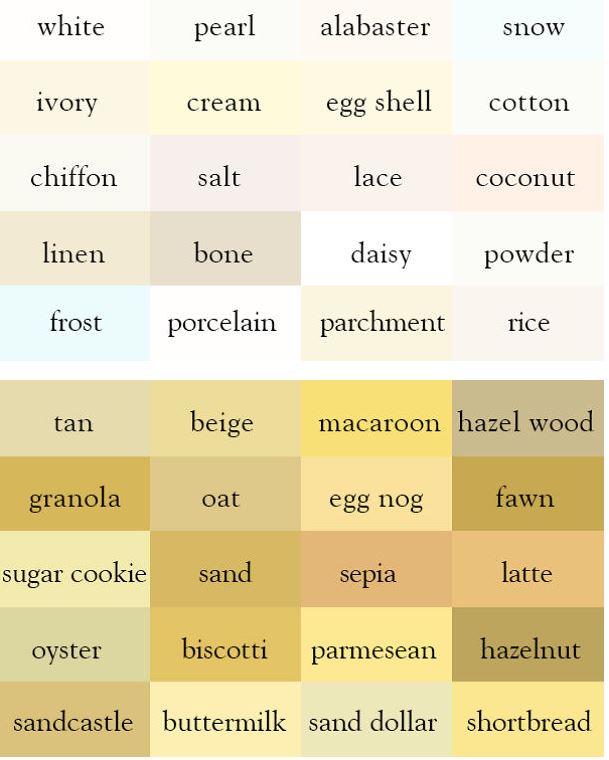
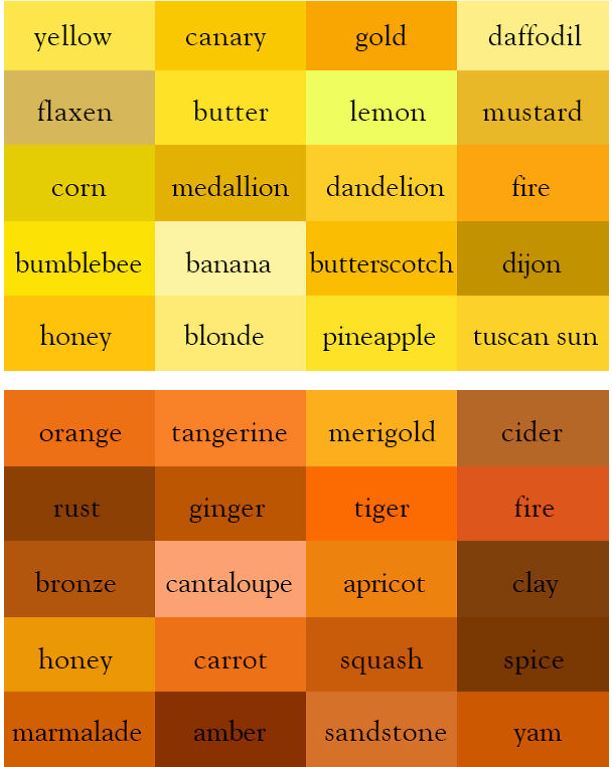
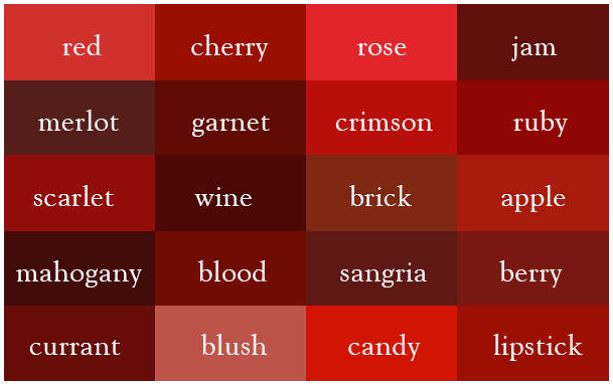
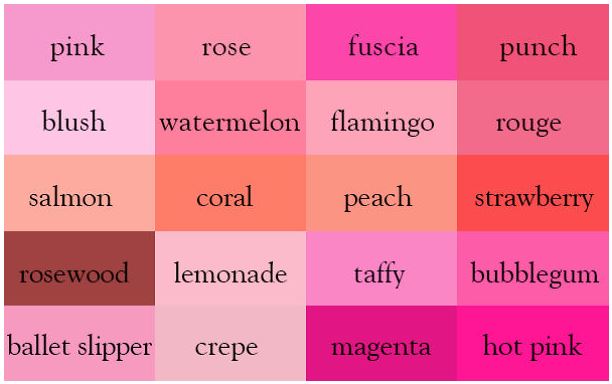
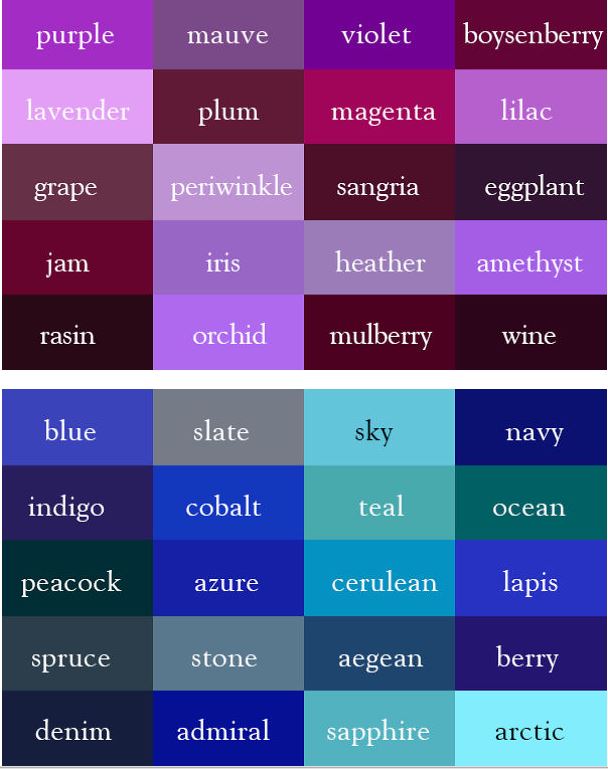
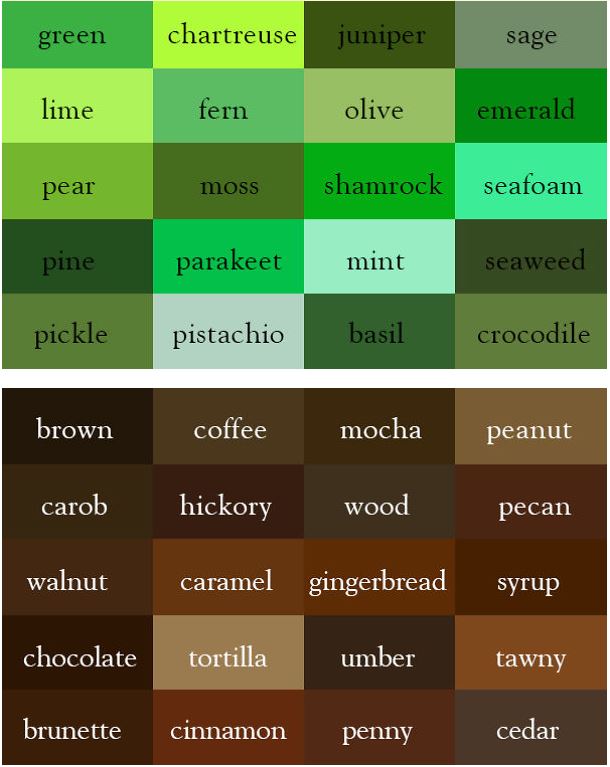
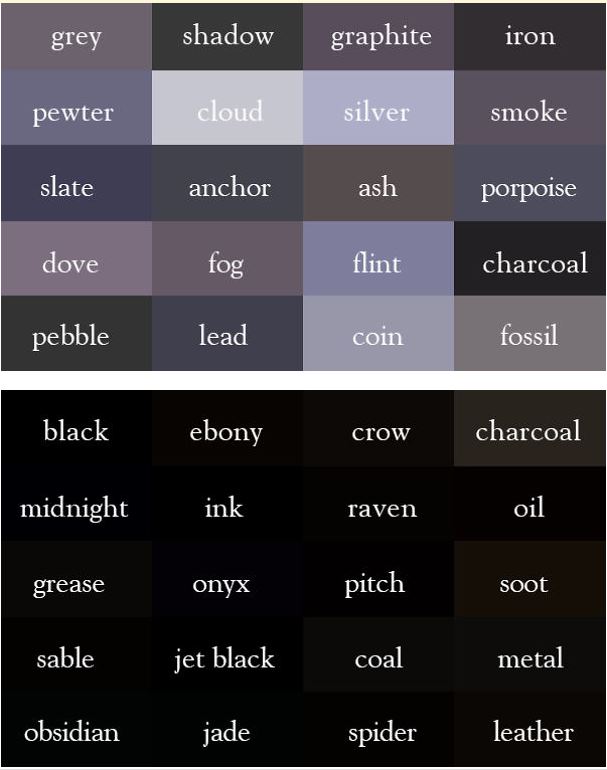
    This amazing author and illustrator, Ingrid Sundberg, has come up with an brilliant infographic chart for people like me who at times struggle desperately with colour names.

    Really, where have you been all my life?

    There are so many times you can use the word black. Now I have words like midnight, obsidian, sable, ink – the lists goes on! This is literally every writer’s dream.

    Take a look at the chart below:


    colourchart1 colourchart2 Colourchart3 Colourchart4 colourchart5 colourchart6 Colourchart7


    Article and image credit: Boredpanda.com and RaindropsofSapphire.com

  • 10 Embarrassing Phrases Even Smart People Misuse

    10 Embarrassing Phrases Even Smart People Misuse

    I’ve made a few of these

    Here are some mistakes you may not be aware that you have made in the past and could be making right now!

    We’ve all heard of a few catch phrases now and then in books, on the internet, in magazines that we might think are right but are actually WRONG!

    These incorrect phrases might even be from authoritative and professional sources.

    Take a look at the list below. Have you made some of these mistakes?


    1. Sneak peak

    A “peak” is a mountain top. A “peek” is a quick look. The correct expression is “sneak peek,” meaning a secret or early look at something. This error appeared on Oxford University’s site as well as that of the National Park Service.


    2. Deep-seeded

    This should be “deep-seated,” to indicate that something is firmly established. Though “deep-seeded” might seem to make sense, indicating that something is planted deep in the ground, this is not the correct expression. Correctica found this error on the Washington Post and the White House websites.


    3. Extract revenge

    To “extract” something is to remove it, like a tooth. The correct expression is “exact revenge,” meaning to achieve revenge. Both The New York Times and the BBC have made this error.


    4. I could care less

    “I couldn’t care less” is what you would say to express maximum apathy toward a situation. Basically you’re saying, “It’s impossible for me to care less about this because I have no more care to give. I’ve run out of care.” Using the incorrect “I could care less” indicates that “I still have care left to give–would you like some?”


    5. Emigrated to

    With this one there is no debate. The verb “emigrate” is always used with the preposition “from,” whereas immigrate is always used with the preposition “to.” To emigrate is to come from somewhere, and to immigrate is to go to somewhere. “Jimmy emigrated from Ireland to the United States” means the same thing as “Jimmy immigrated to the United States from Ireland.” It’s just a matter of what you’re emphasizing–the coming or the going.


    6. Slight of hand

    “Sleight of hand” is a common phrase in the world of magic and illusion, because “sleight” means dexterity or cunning, usually to deceive. On the other hand, as a noun, a “slight” is an insult.


    7. Honed in

    First, it’s important to note that this particular expression is hotly debated. Many references now consider “hone in” an proper alternate version of “home in.” That said, it is still generally accepted that “home in” is the more correct phrase. To home in on something means to move toward a goal, such as “The missile homed in on its target.” To “hone” means to sharpen. You would say, “I honed my résumé writing skills.” But you would likely not say, “The missile honed in on its target.” When followed by the preposition “in,” the word “hone” just doesn’t make sense.


    8. Baited breath

    The term “bated” is an adjective meaning suspense. It originated from the verb “abate,” meaning to stop or lessen. Therefore, “to wait with bated breath” essentially means to hold your breath with anticipation. The verb “bait,” on the other hand, means to taunt, often to taunt a predator with its prey. A fisherman baits his line in hopes of a big catch. Considering the meaning of the two words, it’s clear which is correct, but the word “bated” is mostly obsolete today, leading to ever-increasing mistakes in this expression.


    9. Piece of mind

    This should be “peace” of mind, meaning calmness and tranquility. The expression “piece of mind” actually would suggest doling out sections of brain.


    10. Wet your appetite

    This expression is more often used incorrectly than correctly–56 percent of the time it appears online, it’s wrong. The correct idiom is “whet your appetite.” “Whet” means to sharpen or stimulate, so to “whet your appetite” means to awaken your desire for something.


    Article and image credit: Inc.com

  • How Stephen King Teaches Writing

    How Stephen King Teaches Writing

    Wouldn’t You Want to Learn From the Best?

    Stephen King is a famous best selling American author of horror, science fiction and fantasy. He has sold more than 350 million copies of his books and many of them have been made into movies, tv series and comic books.

    In this article, King recounts his years as a high school English teacher. He is interviewed by Jessica Lahey on grammar and explains why discovering great literature is like losing one’s virginity.

    Check out the article below and maybe, like me, you’d wish Stephen King was your English high school teacher!

    ***


    Jessica Lahey: You write that you taught grammar “successfully.” How did you define “success” when you were teaching?


    Stephen King:  Success is keeping the students’ attention to start with, and then getting them to see that most of the rules are fairly simple. I always started by telling them not to be too concerned with stuff like weird verbs (swim, swum, swam) and just remember to make subject and verb agree. It’s like we say in AA—KISS. Keep it simple, stupid.


    Lahey: You write, “One either absorbs the grammatical principles of one’s native language in conversation and in reading or one does not.” If this is true, why teach grammar in school at all? Why bother to name the parts?


    King: When we name the parts, we take away the mystery and turn writing into a problem that can be solved. I used to tell them that if you could put together a model car or assemble a piece of furniture from directions, you could write a sentence. Reading is the key, though. A kid who grows up hearing “It don’t matter to me” can only learn doesn’t if he/she reads it over and over again.


    Lahey: In the introduction to Strunk and White’s The Elements of Style, E.B. White recounts William Strunk’s instruction to “omit needless words.” While your books are voluminous, your writing remains concise. How do you decide which words are unnecessary and which words are required for the telling?


    King: It’s what you hear in your head, but it’s never right the first time. So you have to rewrite it and revise it. My rule of thumb is that a short story of 3,000 words should be rewritten down to 2,500. It’s not always true, but mostly it is. You need to take out the stuff that’s just sitting there and doing nothing. No slackers allowed! All meat, no filler!


    Jessica Lahey: In On Writing, you identified some phrases that should be excised from every writer’s toolbox: “At this point in time” and “at the end of the day.” Any new irksome phrases you’d be willing to share? (Mine’s “on accident.”)


    King: “Some people say,” or “Many believe,” or “The consensus is.” That kind of lazy attribution makes me want to kick something. Also, IMHO, YOLO, and LOL.


    Lahey: Great writing often resides in the sweet spot between grammatical mastery and the careful bending of rules. How do you know when students are ready to start bending? When should a teacher put away his red pen and let those modifiers dangle?


    King: I think you have to make sure they know what they’re doing with those danglers, those fragmentary and run-on sentences, those sudden digressions. If you can get a satisfactory answer to “Why did you write it this way?” they’re fine. And—come on, Teach—you know when it’s on purpose, don’t you? Fess up to your Uncle Stevie!


    Lahey: You have called informal essays “silly and unsubstantial things,” not at all useful for teaching good writing. What kinds of essay assignments are useful?


    King: I tried to give assignments that would teach kids to be specific. I used to repeat “See, then say” half a dozen times a day. So I would often ask them to describe operations that they take for granted. Ask a girl to write a paragraph on how she braids her sister’s hair. Ask a boy to explain a sports rule. These are just basic starting points, where students learn to write on paper what they might tell a friend. It keeps it concrete. If you ask a kid to write on “My Favorite Movie,” you’re opening the door to subjectivity, and hence to a flood of clichés.


    Lahey: English teachers tend to fall into one of two camps when it comes to literacy: Those who believe we should let students read anything they want so they will be more likely to engage with books, and those who believe teachers should push kids to read more challenging texts in order to expose them to new vocabulary, genres, and ideas. Where would you pitch your tent?


    King: You don’t want to leave them in despair, which is why it’s such a horrible idea to try teaching Moby-Dick or Dubliners to high school juniors. Even the bright ones lose heart. But it’s good to make them reach a little. They’ve got to see there are brighter literary worlds than Twilight. Reading good fiction is like making the jump from masturbation to sex.


    Lahey: Do you think great teachers are born or do you think they can be trained?


    King: Good teachers can be trained, if they really want to learn (some are pretty lazy). Great teachers, like Socrates, are born.


    Lahey: You refer to writing as a craft rather than an art. What about teaching? Craft, or art?


    King: It’s both. The best teachers are artists.


    Article and Image Credit: The Atlantic

  • Science Shows Something Surprising About People Who Love to Write

    Science Shows Something Surprising About People Who Love to Write

    Did you know the benefits of writing go far beyond building up your vocabulary.


    I find writing to be one of the most enjoyable activities. There is nothing that I like better than to sit on my couch at the end of the day with a cup of tea and write for an hour or so.

    If you are a blogger, a journalist, a poet or an author then you are in for some good news!

    The act of writing has some INCREDIBLE benefits to your body. At first I thought that this could just be to reduce stress levels, the way meditation does, but according to the article below the benefits reach far beyond that.

    So if you have been procrastinating on whether to pick up that pen or open up your computer, hopefully this will motivate you to get a move on!

    Additional Information


    ***


    No matter the quality of your prose, the act of writing itself leads to strong physical and mental health benefits, like long-term improvements in mood, stress levels and depressive symptoms. In a 2005 study on the emotional and physical health benefits of expressive writing, researchers found that just 15 to 20 minutes of writing three to five times over the course of the four-month study was enough to make a difference.


    By writing about traumatic, stressful or emotional events, participants were significantly more likely to have fewer illnesses and be less affected by trauma. Participants ultimately spent less time in the hospital, enjoyed lower blood pressure and had better liver functionality than their counterparts.


    It turns out writing can make physical wounds heal faster as well.


    In 2013, New Zealand researchers monitored the recovery of wounds from medically necessary biopsies on 49 healthy adults. The adults wrote about their thoughts and feelings for just 20 minutes, three days in a row, two weeks before the biopsy. Eleven days later, 76% of the group that wrote had fully healed. Fifty-eight percent of the control group had not recovered. The study concluded that writing about distressing events helped participants make sense of the events and reduce distress.


    Even those who suffer from specific diseases can improve their health through writing. Studies have shown that people with asthma who write have fewer attacks than those who don’t; AIDS patients who write have higher T-cell counts. Cancer patients who write have more optimistic perspectives and improved quality of life.


    Writers are doing something right.

    Article Credit: Mic.com

  • The Cookie Thief – A Poem about an “Unfortunate” Misunderstanding

    The Cookie Thief – A Poem about an “Unfortunate” Misunderstanding

    Could you see yourself in this situation?

    This is one of my favourite poems from the book, Inspirational Poems about Life and Success.  It’s called The Cookie Thief, by Valerie Cox and int clever and hilarious.

    The following poem makes you think about how we judge other people. Sometimes we might find ourselves in certain situations and they might not be what they seems.

    Please enjoy the poem below and let us know what you think!


    The Cookie Thief

    A woman was waiting at an airport one night,
    With several long hours before her flight.
    She hunted for a book in the airport shops.
    Bought a bag of cookies and found a place to drop.

    She was engrossed in her book but happened to see,
    That the man sitting beside her, as bold as could be.
    Grabbed a cookie or two from the bag in between,
    Which she tried to ignore to avoid a scene.

    So she munched the cookies and watched the clock,
    As the gutsy cookie thief diminished her stock.
    She was getting more irritated as the minutes ticked by,
    Thinking, “If I wasn’t so nice, I would blacken his eye.”

    With each cookie she took, he took one too,
    When only one was left, she wondered what he would do.
    With a smile on his face, and a nervous laugh,
    He took the last cookie and broke it in half.

    He offered her half, as he ate the other,
    She snatched it from him and thought… oooh, brother.
    This guy has some nerve and he’s also rude,
    Why he didn’t even show any gratitude!

    She had never known when she had been so galled,
    And sighed with relief when her flight was called.
    She gathered her belongings and headed to the gate,
    Refusing to look back at the thieving ingrate.

    She boarded the plane, and sank in her seat,
    Then she sought her book, which was almost complete.
    As she reached in her baggage, she gasped with surprise,
    There was her bag of cookies, in front of her eyes.

    If mine are here, she moaned in despair,
    The others were his, and he tried to share.
    Too late to apologize, she realized with grief,
    That she was the rude one, the ingrate, the thief.


    ~ Valerie Cox

    A poem from Inspirational Poems about Life and Success: Thought-provoking and Empowering Words to Uplift and Inspire You.

  • 10 Most Beautiful Words for Women

    10 Most Beautiful Words for Women

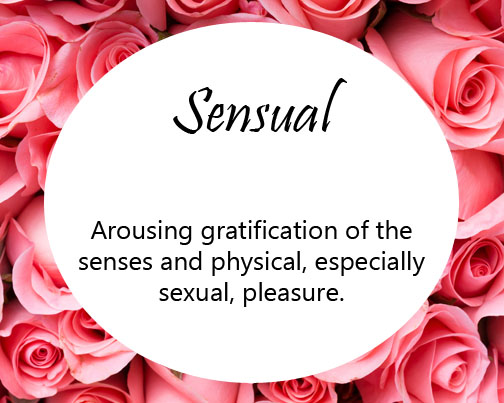
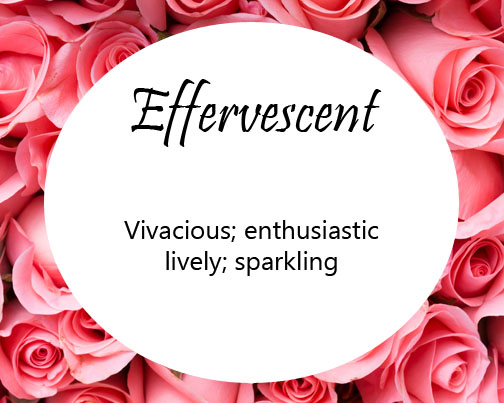
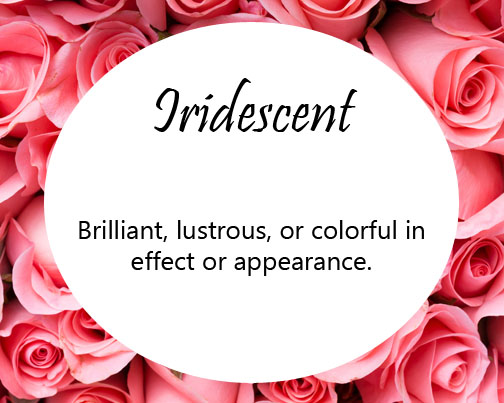
    Need some Delicious Words to Describe Women?

    Women can be described in various different ways in stories, movies and poems! We’ve heard the generic nice descriptions like, kind, funny, cute, happy, smart, lovely, pretty, wonderful etc

    But there are much better words to add to your repertoire. Have a look at the delicious list we have below and their meanings. Try out some of these the next time you pick up your pen or type on your computer.

    These are some of my favourites, but please feel free to share and add a few of your own in the comments!

    Check these 10 out below.

    Word1


    Word2


    Word3


    Word4


    Word5


    MORE ON THE NEXT PAGE!